Project 01 · Solent University, 2026
Pirarucu
A creative basecamp for the Amazon
Scroll
Project 01 · Solent University, 2026
A creative basecamp for the Amazon
Obsidian and Dunes, reimagined.
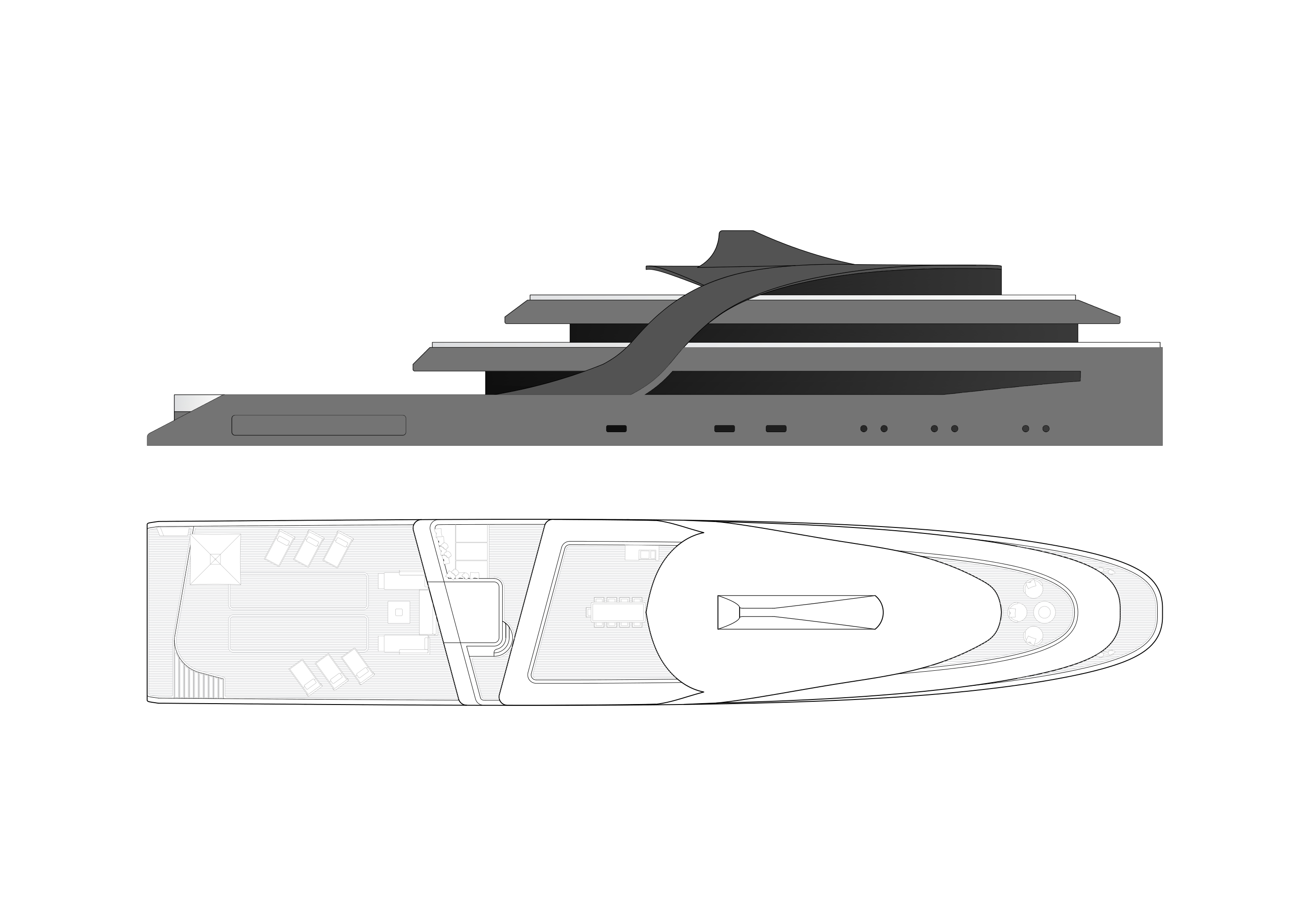
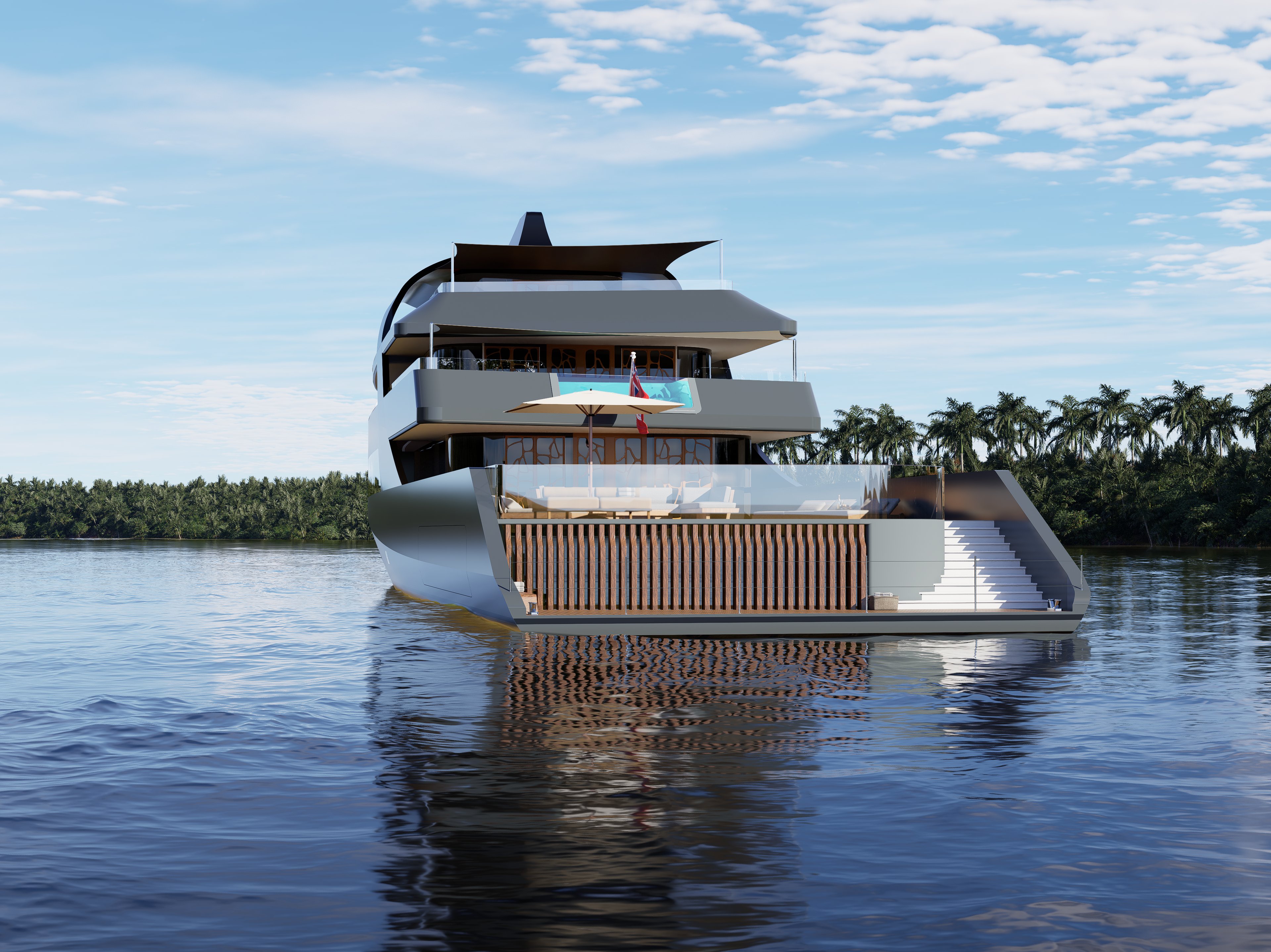
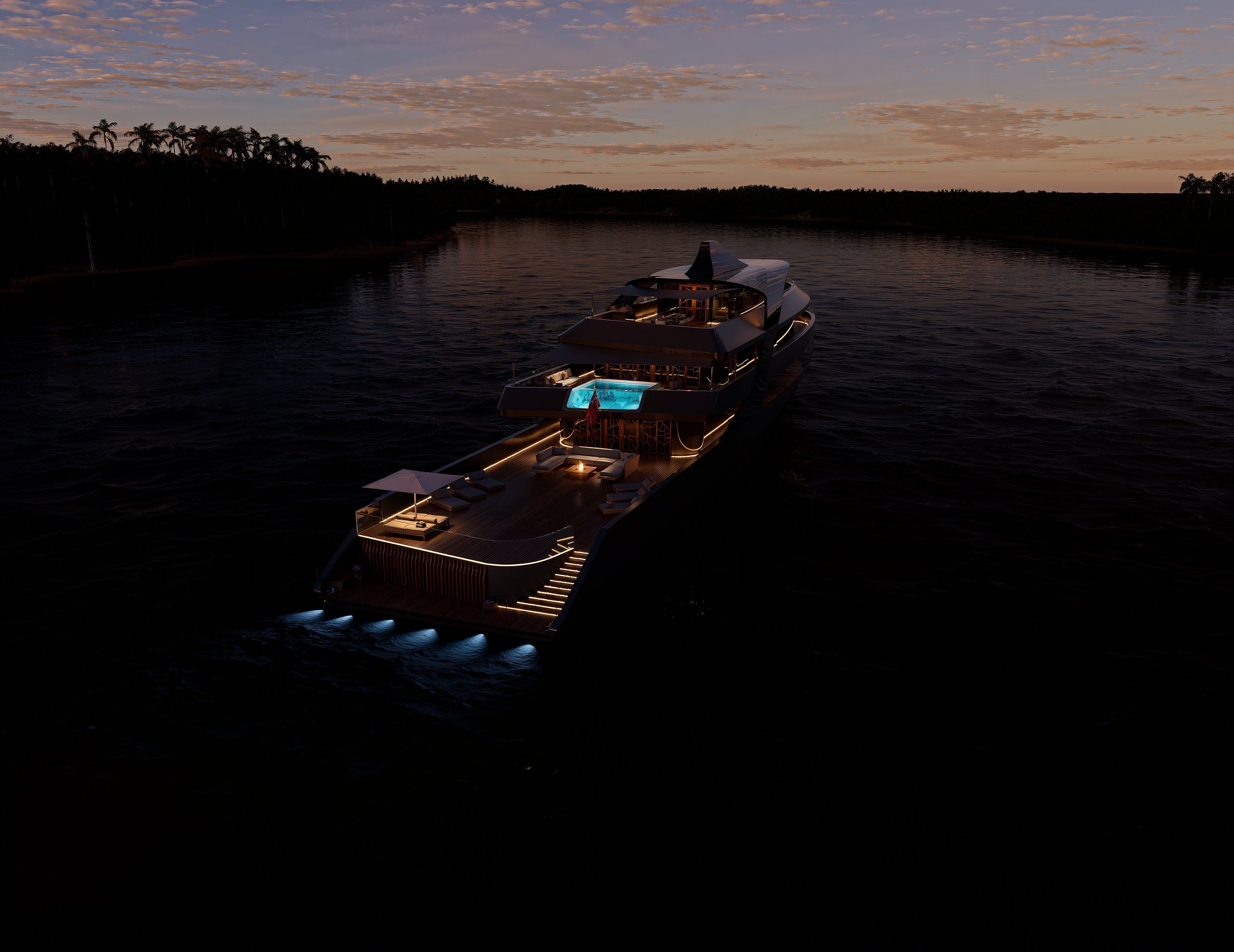
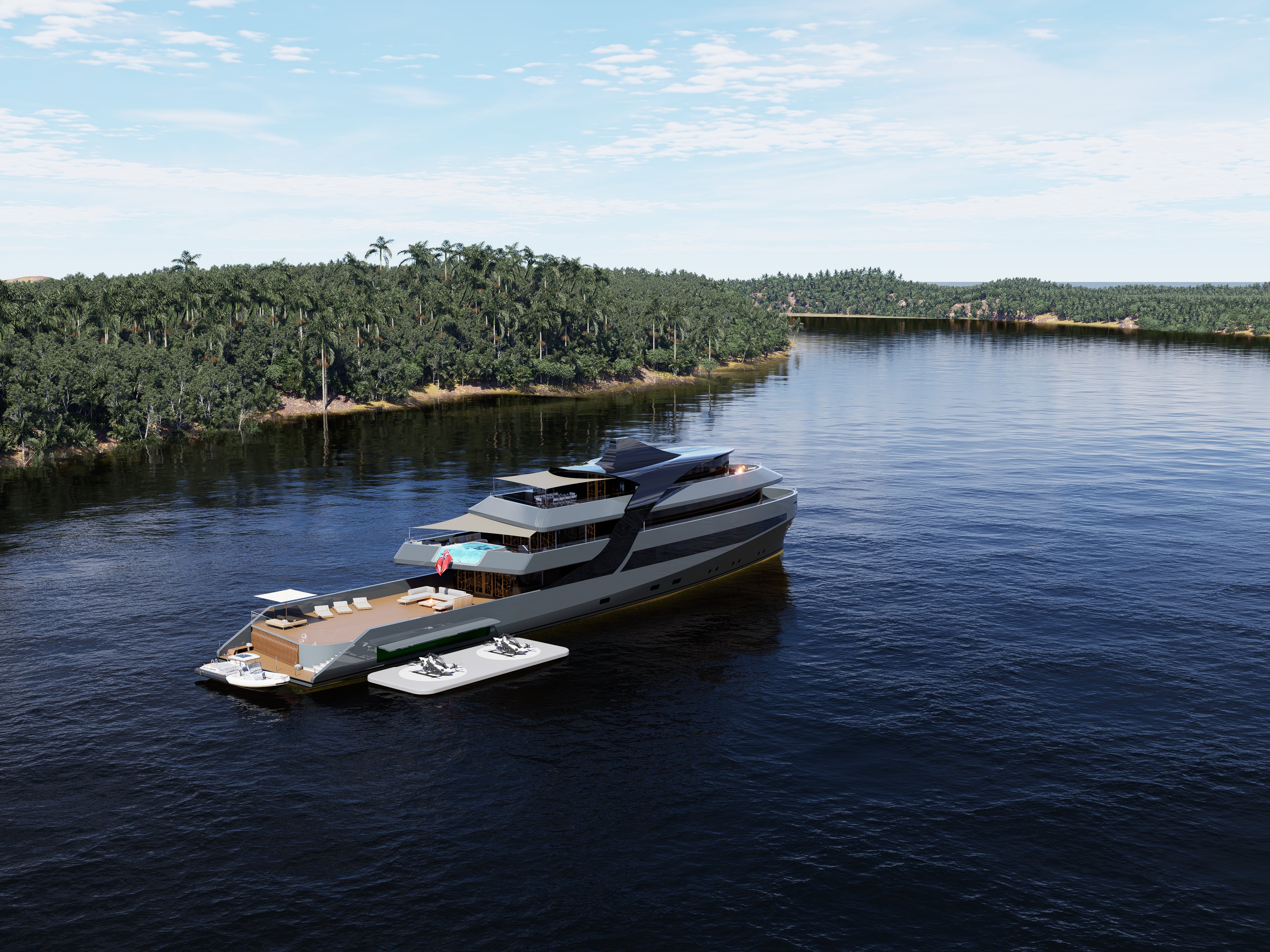
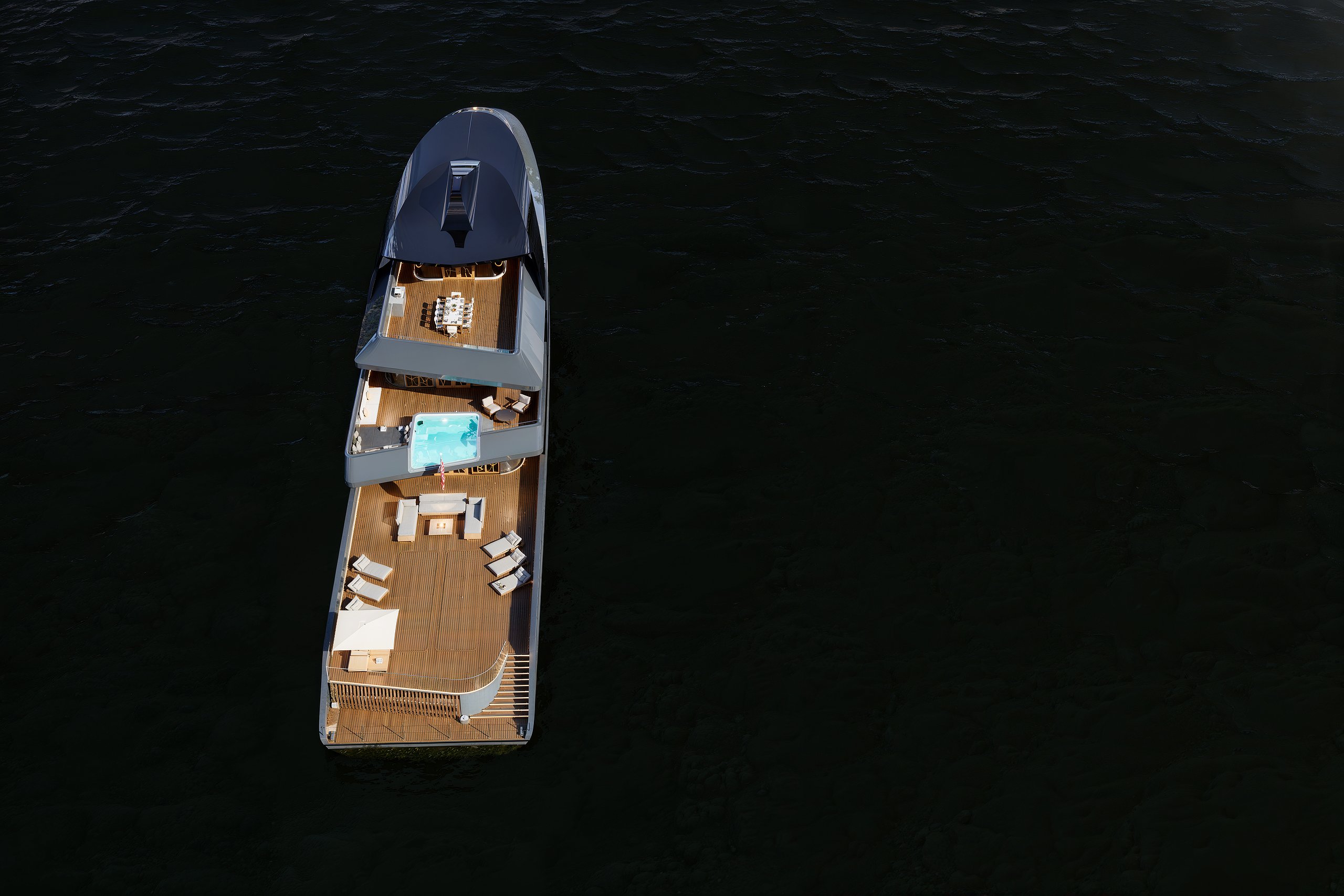
The exterior language takes its point of departure from two Feadship concepts — the Dunes prototype and Obsidian — reinterpreted through the demands of an explorer platform.
A single curved superstructure line sweeps across the profile, interrupting the otherwise sharp geometry of the hull. The silhouette holds its composure from every angle — a 60-metre statement of restraint, drawn for long passages and the patience that exploration demands.
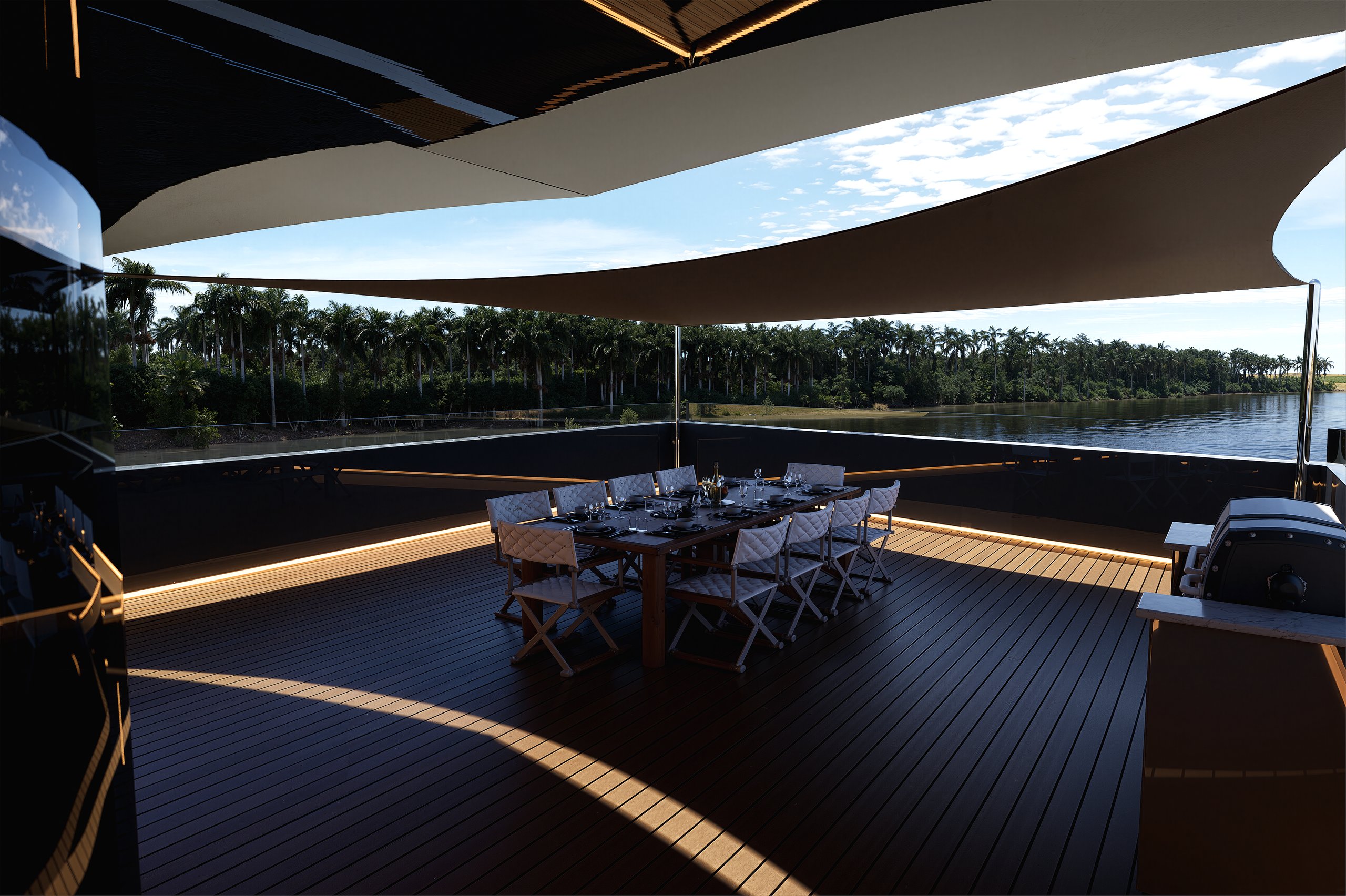
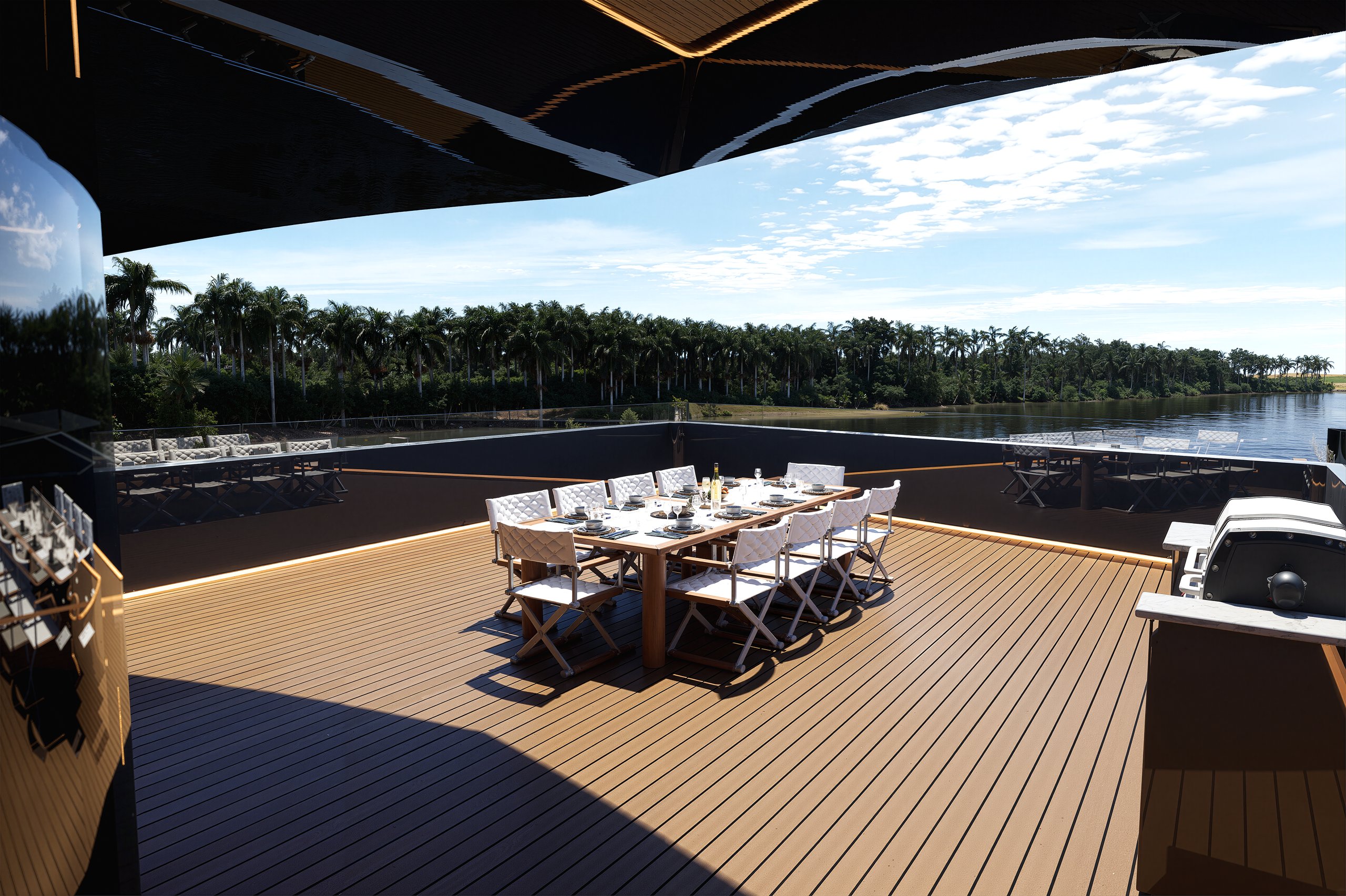
Dinner in the Amazon breeze.
The aft deck opens into a generous open-air lounge that steps down toward the water on solid teak. At its heart sits a full exterior galley and grill — a proper barbecue built for slow evenings, where dinner is cooked in the open and served as the light fades over the river.
It is a space made for gathering — a long table under the open sky, the warm air of the rainforest moving through, friends close and the Amazon within reach. The line between deck and dinner party simply dissolves.
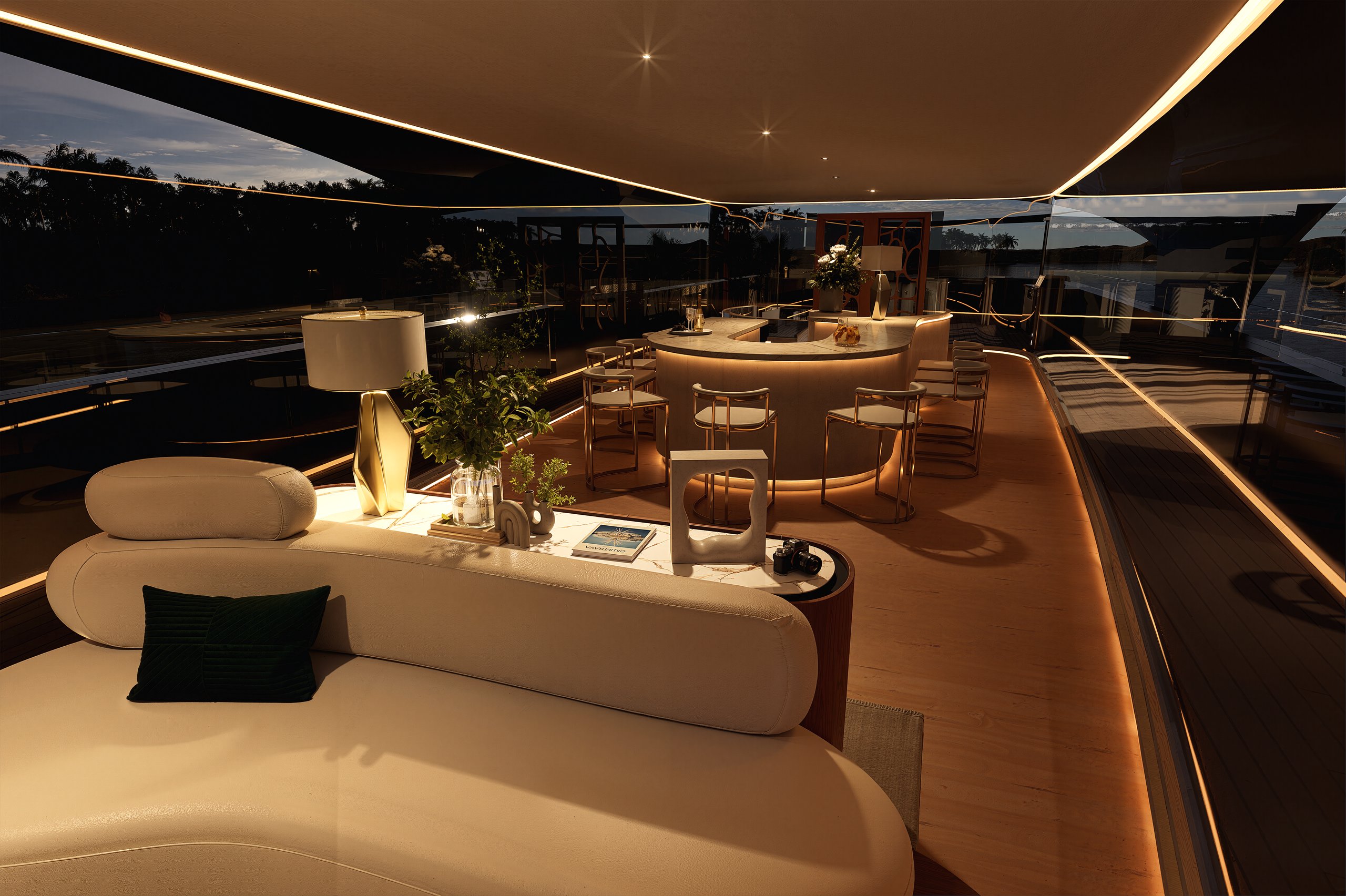
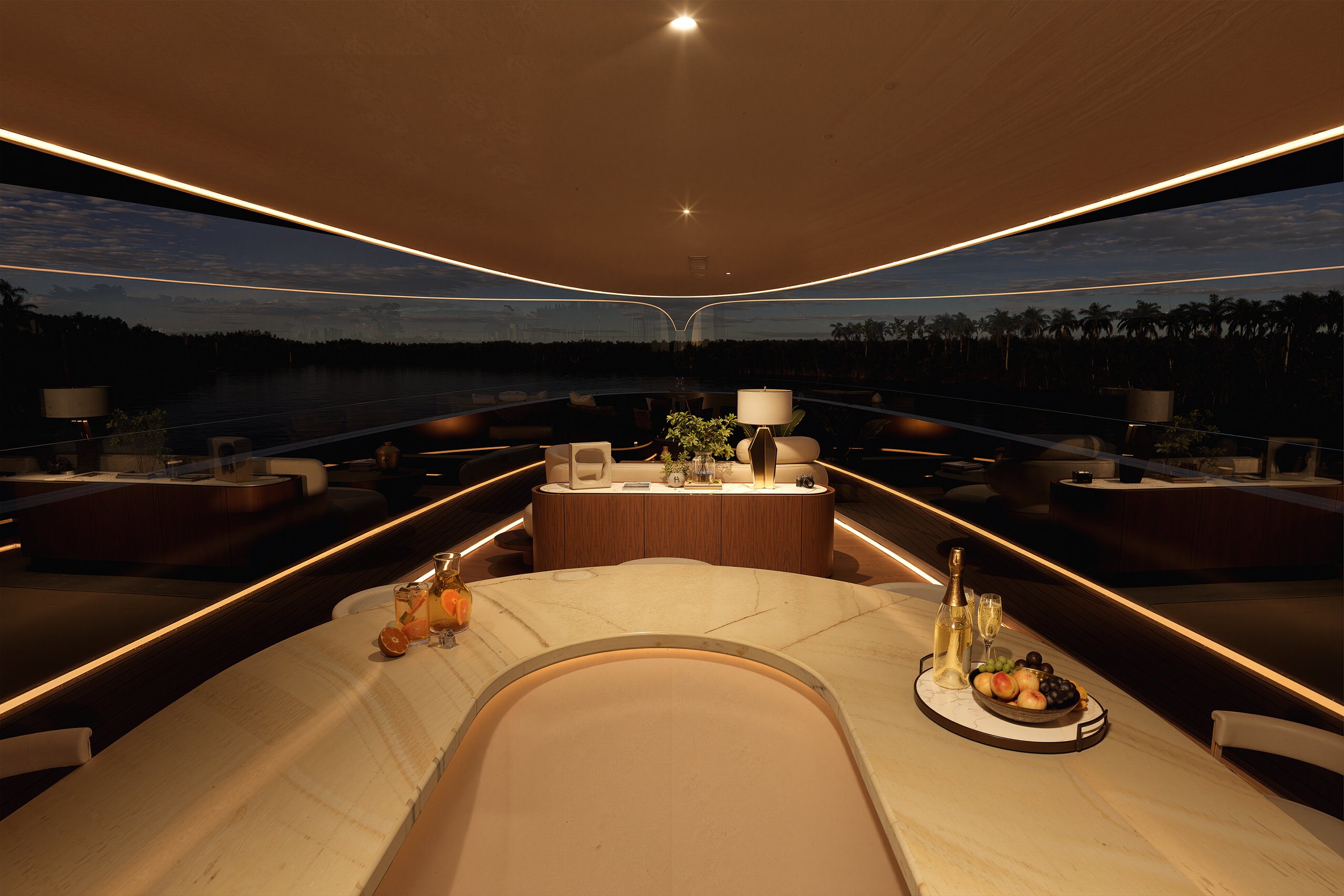
A basecamp after dark.
The bridge deck lounge is the yacht's social core. A central curved bar in onyx and travertine, bronze-rimmed bar stools, and ceiling-height glazing that dissolves the boundary between interior and river.
Warm LED cove lighting follows the organic sweep of the ceiling — a quiet reference to the meandering geometry of the Amazon itself, visible through every window.
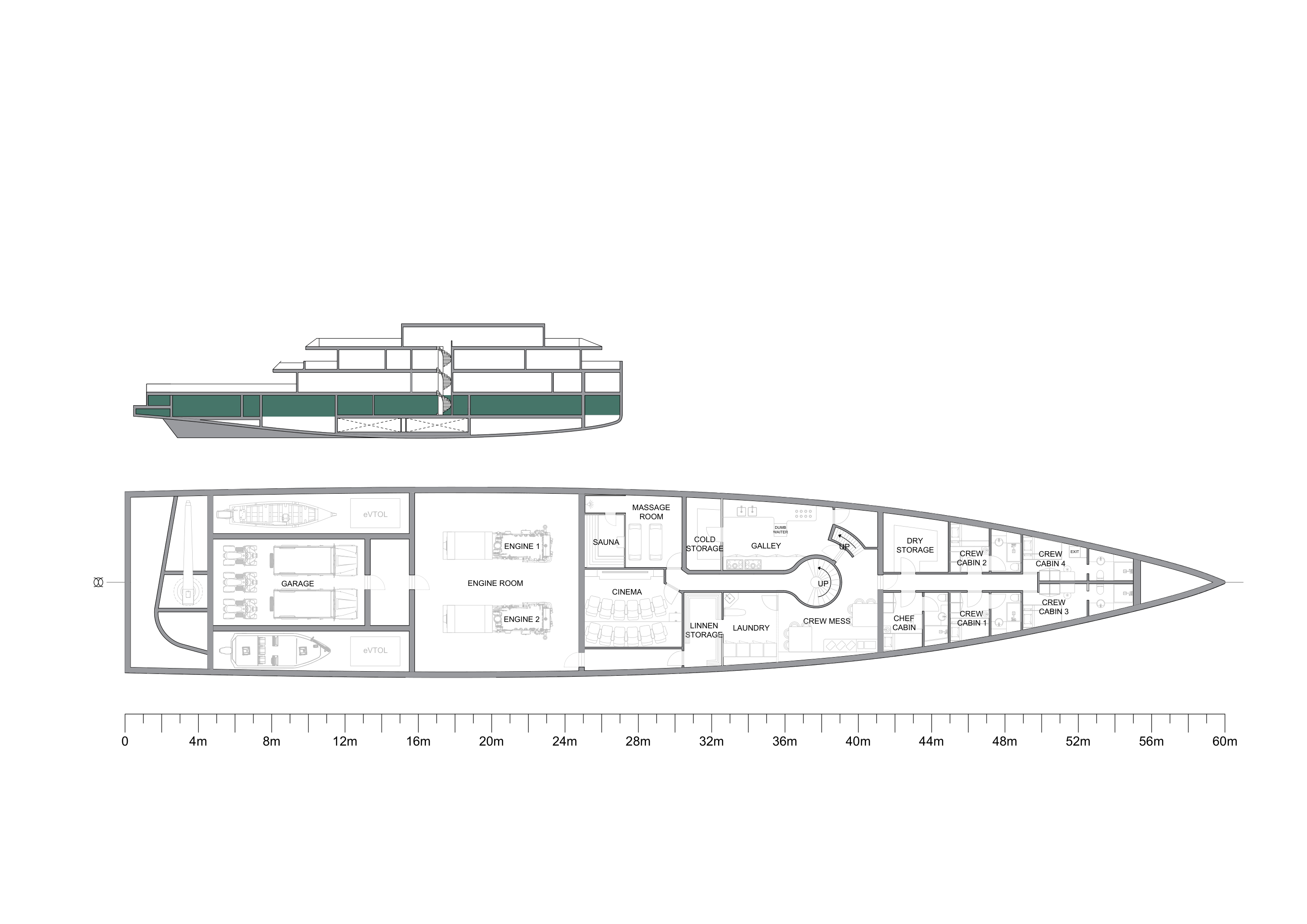
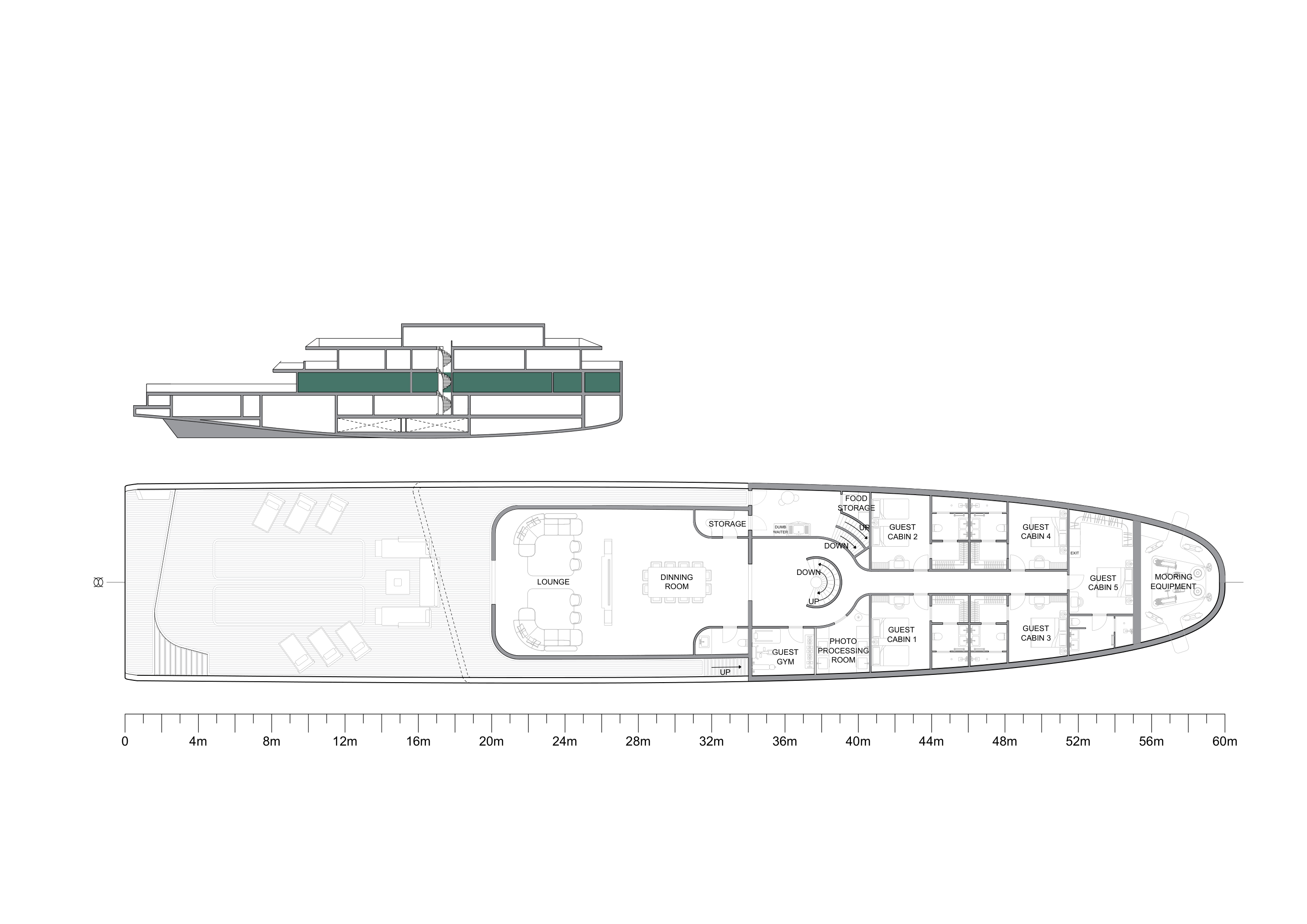
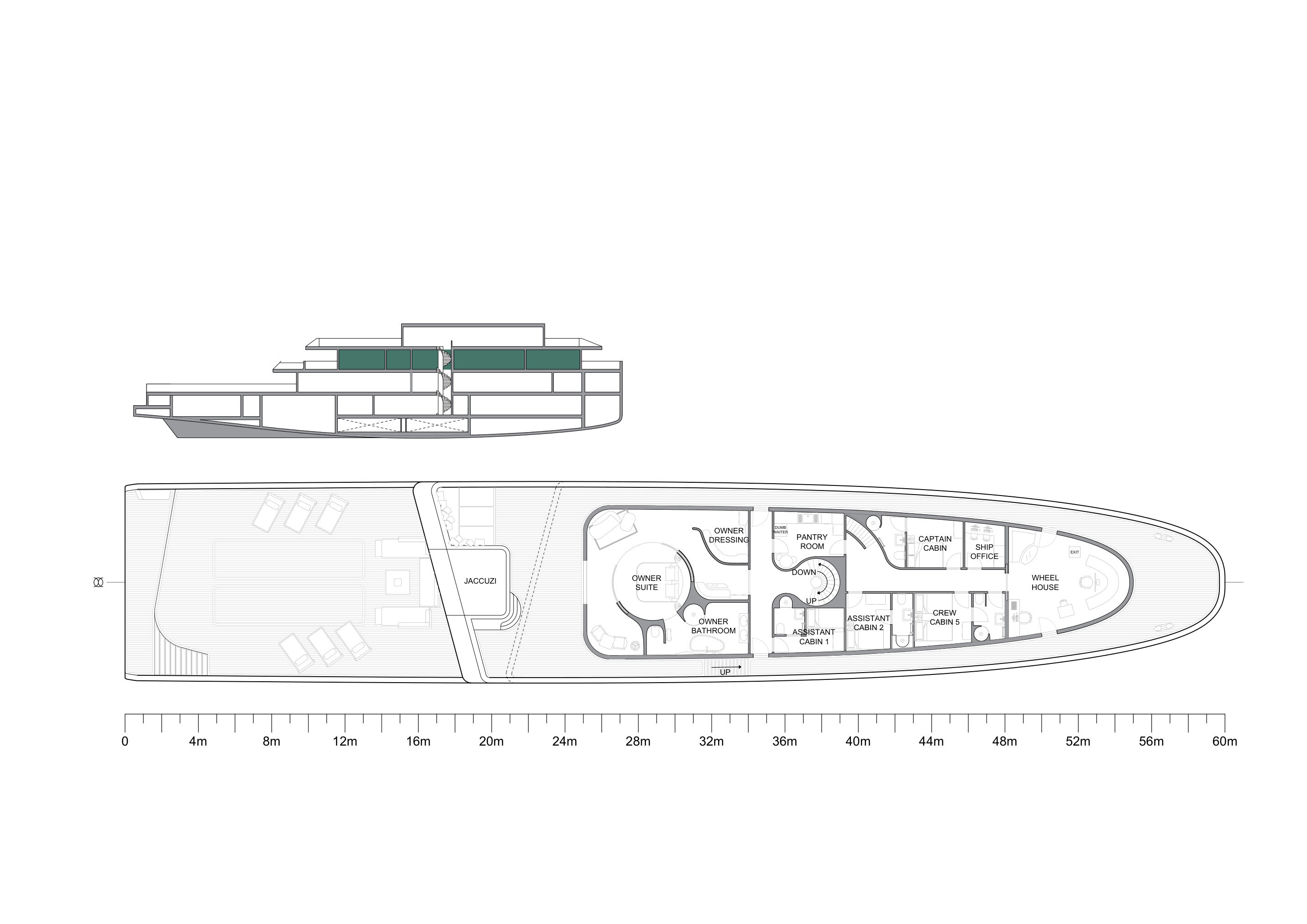
My contribution: exterior design direction — drawing on the Dunes and Obsidian concepts by Feadship as points of departure — general arrangements of the lower and upper decks, 3D modelling, and the complete rendering suite.
Return to the studioEvery line in the design answers to a set of numbers. Pirarucu was developed as a 60-metre twin-screw explorer — its resistance, propulsion, hybrid power and hotel load engineered in full. What follows is a summary of that technical layer.
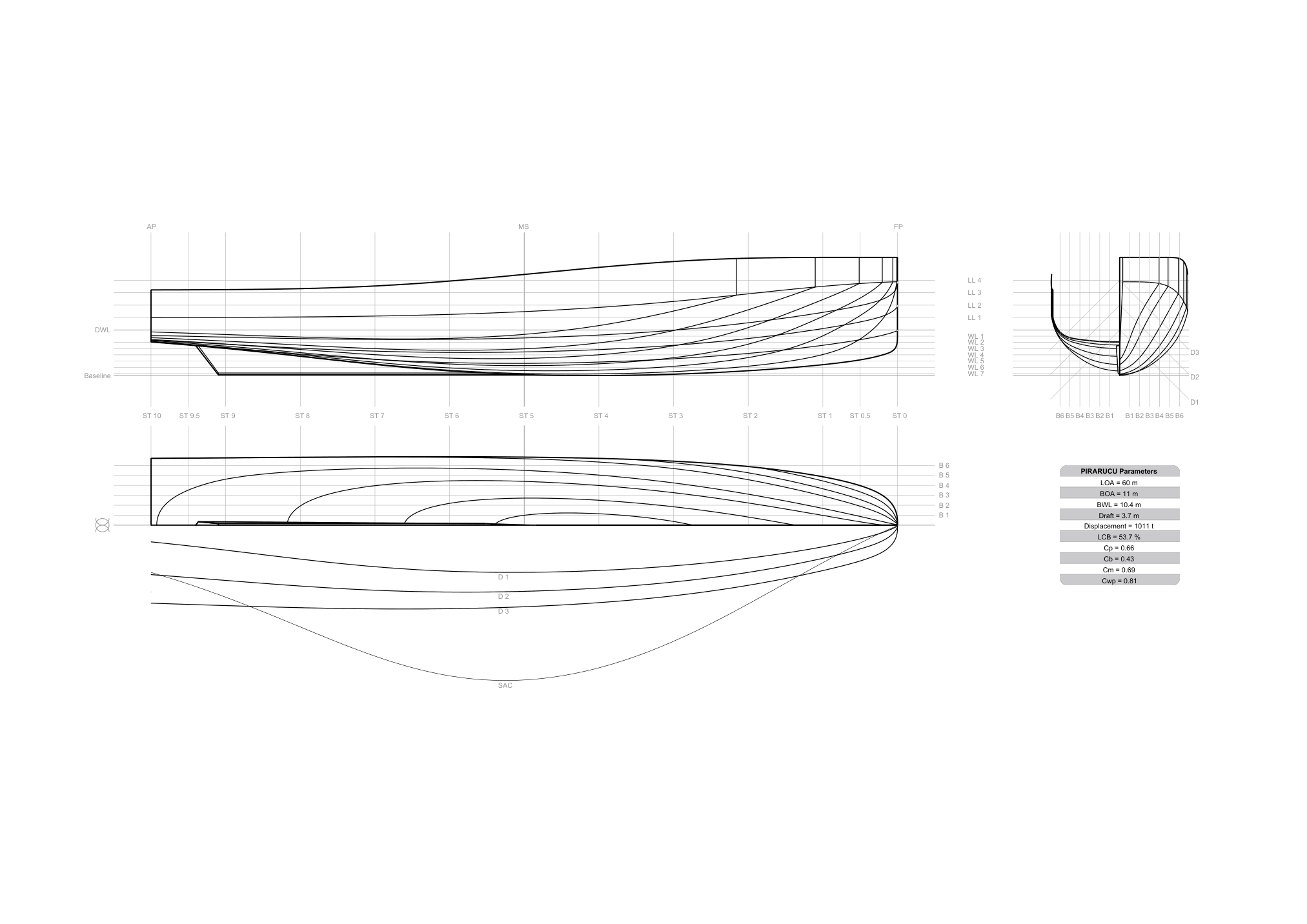
Resistance predicted with the Holtrop & Mennen method and verified in Maxsurf. Twin Wageningen B-series propellers — five blades, blade-area ratio 0.90, 1.3 m diameter — sized for an open-water efficiency of 0.73.
| Operating mode | Speed | Power / engine | Range |
|---|---|---|---|
| Silent glide (electric) | 5 kn | — | ~30 nm |
| Economic cruise | 10 kn | 243 kW | 5,000 nm |
| Fast cruise | 12 kn | 440 kW | — |
| Amazon transit (guests) | 14 kn | 800 kW | 2,300 nm |
| Maximum | 16 kn | 1,220 kW | 2,800 nm |
A diesel-electric hybrid with a fully electric "silent glide" mode for emission-free, near-silent running on the river. Permanent-magnet motors draw from an LFP battery sized for six hours at 5 knots; two Kohler generators carry the hotel and charging load.
HVAC sized from an ASHRAE-style heat balance for tropical conditions — 35 °C / 70 % RH air over 32 °C sea water — giving a 141 kW cooling load served by a water-cooled screw chiller at COP 4.2. Generators are sized to the worst-case anchor demand: 216 kW, or 255 kVA at 0.85 power factor.
| Operating mode | HVAC | Non-HVAC | Net hotel load |
|---|---|---|---|
| At sea | 44 kW | 97 kW | 120 kW |
| At harbour | 55 kW | 137 kW | 144 kW |
| At anchor (worst case) | 78 kW | 162 kW | 216 kW |
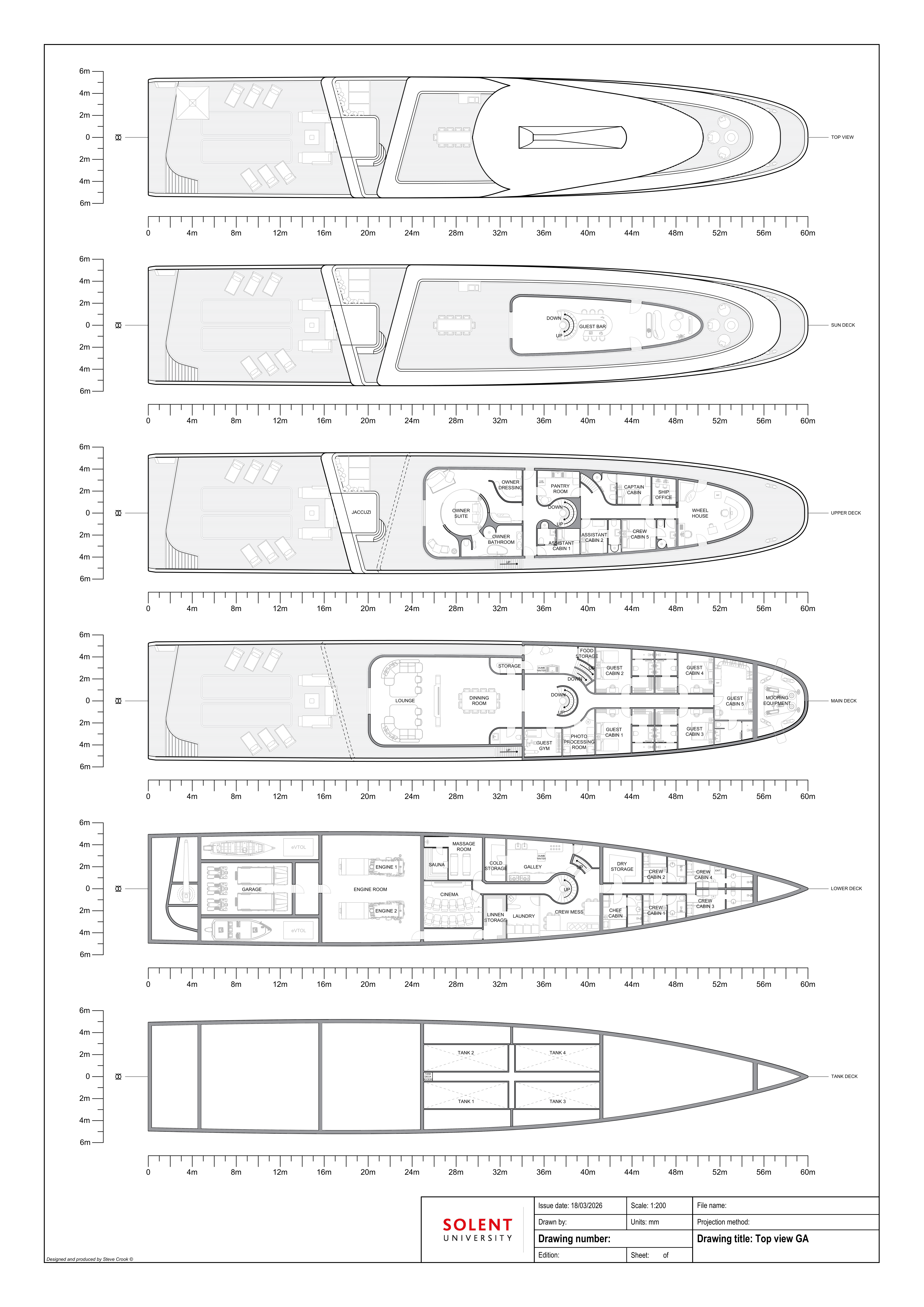
Engineering scope shown: resistance & propulsion, hybrid power and hotel-load / HVAC design, by Marc Palacios. Stability and structural design by project teammates, as part of the MSc Superyacht Design programme at Solent University.